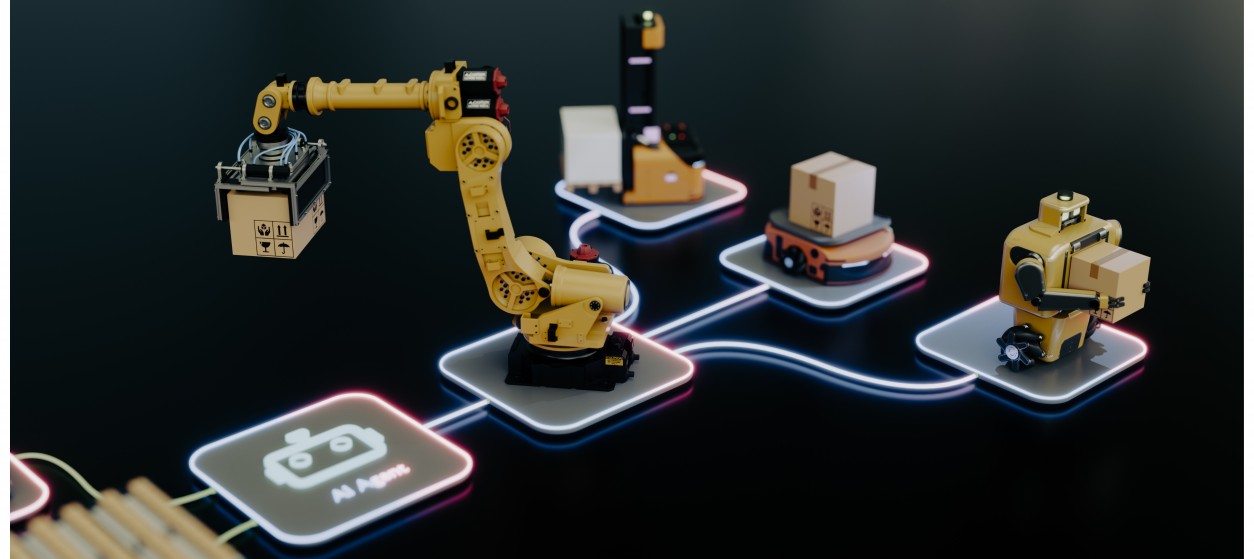
For many years, the introduction of AI in the workplace was about deploying some chatbots in order to support and automate helpdesk functions or recommendation engines. This legacy deployment of AI is changing fast, as a new generation of AI agents can nowadays be used to plan multi-step tasks, call other systems, retain context across sessions, and hand off work to colleagues, human or digital workers (i.e. other AI agents). Enterprise AI is no longer something you open when you need it. Rather, it starts behaving like a member of the team, with responsibilities, a work queue, and measurable output. This shift raises a practical question for every IT leader: what actually happens when AI stops being a tool and starts acting like a coworker? Modern enterprises had better understand what is driving this transition and how to prepare for it.
The Line Between Tool and Teammate is Nowadays Blurred
A traditional software tool waits for you. You open it, give it an input, and it returns an output. AI agents are autonomous software programs that break that pattern. You give an AI agent one a goal (e.g., “reconcile these two supplier invoices and flag discrepancies”) and it will decompose the task, query the systems it needs, apply judgment where the instructions are ambiguous, and report back with a result rather than a raw response. This matters because autonomy changes the relationship. Where a tool executes, an agent decides. When AI in the workplace starts making sequences of small decisions on your behalf, it starts to resemble a colleague more than a calculator. It can be assigned recurring duties, it can be evaluated on the quality of its output over time, and it can escalate when it hits something outside its competence. To get started with this shift, look at where your team already hands off well-defined, repeatable subtasks to a human specialist (e.g., a first-pass contract review or data entry). Those are the roles where AI agents tend to add value fastest, given that the handoff pattern already exists. In the case of such roles, companies need not reinvent their workflow. All that is needed is to reassign a step within established workflows.
Changing the Organizational Chart
Once AI agents hold ongoing responsibilities, someone has to manage them the way they’d manage a person. This means defining scope, setting expectations, and reviewing performance. Treating an agent purely as software, without an owner accountable for its output is one of the best ways to fail with AI automation. Some enterprises are already formalizing this. They assign a “manager of record” for each agent deployed into a workflow i.e., someone responsible for tuning its instructions, monitoring its error rate, and deciding when it needs retraining or retirement. This is a genuinely a new kind of role, part product owner and part people manager, even though the “employee” in question has no calendar and never asks for a raise.
To get this right, start by mapping which decisions an agent is allowed to make independently and which ones require sign-off. Document that boundary the same way you would document a job description. As the AI workforce inside your organization grows, this documentation is likely to become the backbone of a new accountability structure, which will save you from the awkward exercise of reverse-engineering “who approved this” when something goes wrong.
Dealing with the Governance Gap
Most organizations have mature access controls for human employees. These include for example onboarding checklists, permission tiers, offboarding procedures. However, very few organisations have the equivalent for AI agents, and this is the gap is where risk concentrates. An agent with standing credentials to a finance system, a CRM, and an email inbox is, from a security standpoint, indistinguishable from an employee with the same access. In practice, an agent carries more risk, as it act at machine speed and rarely pauses to double-check itself.
In this context, enterprise AI governance needs to catch up quickly. At minimum, every agent operating in production should have a scoped identity, an audit trail of the actions it took and why, and a kill switch that a human can pull without needing engineering support. Logging isn’t optional here. Whenever an agent makes a judgment call, you need to be able to reconstruct what data it saw and what reasoning led to its action. Most importantly, such logging is in most cases regulatory requirement as well.
For a useful analogy think of agent permissions the way you’d think of a new hire’s laptop provisioning. You would not give a first-day employee admin rights to every system by default. The same discipline applies to AI automation. Therefore, you should start narrow, expand access only as trust is earned through observed performance, and revisit those permissions on a regular basis.
Getting Started Without Betting the Farm
You do not need an enterprise-wide rollout to start learning how AI agents behave inside your organization. Pick one workflow with clear success criteria, low blast radius if something goes wrong, and a human reviewer already in the loop. Customer support ticket triage, expense report categorization, and internal knowledge-base search are some excellent and common starting points, as mistakes in these workflows are typically easily recoverable.
It is also important to set explicit metrics before you launch. Such metrics include for example accuracy rate, escalation rate, and time saved per task are a reasonable baseline. Run the agent alongside the existing process for a few weeks rather than replacing it outright. In this way you will be able to compare outputs directly. This staged approach lets you build institutional confidence in AI in the workplace without exposing critical systems to an unproven process.
As results come in, resist the urge to scale immediately. Use the pilot to refine your governance model, your escalation paths, and your monitoring dashboards. Those operational muscles matter more in the long run than the specific use case you started with. This is because they will let you expand the AI workforce safely into higher-stakes areas later.
Overall, AI stops being just a tool. It starts holding ongoing responsibilities such as making judgment calls. Hence, it needs oversight and the same control you would expect for cases where a human would perform similar tasks. This shift is already underway inside enterprise AI programs, and it demands new thinking around management, governance, and permissions rather than just new software. To properly prepare for this shift, it is important to start small, assign clear ownership, and build a proper audit trail. The organizations that treat this transition seriously today will be the ones managing a capable AI workforce with confidence tomorrow.