The combination of Artificial Intelligence (AI) and edge computing is reshaping how organizations process information and act on it. For years, IoT devices collected data and shipped it to a distant cloud for analysis. This is a model that worked in the past, yet become obsolote in recent years. As industrial environments, connected infrastructures, and real-time applications multiplied, the round-trip to the Cloud became a bottleneck that latency-sensitive systems simply could not afford. Edge AI changes that equation, as it can rung intelligent models directly on or near the devices that generate data. This enables organizations to act on insights in milliseconds rather than seconds, without depending on network stability or cloud availability. Nowadays, CIOs must understand what Edge AI is, why it matters for IoT and analytics, and how to architect it properly and efficiently.
The Hidden Cost of Sending Everything to the Cloud
Most IoT deployments start with the same default assumption that data must be collected from devices, pushed to the cloud and become analyzed there in order to extract insights and send decisions back. This model made sense when AI workloads were heavy and devices were lightweight. Nevertheless, it comes with a hidden cost that scales badly. That cost has two dimensions:
· The Latency Dimension: A round-trip from an industrial sensor to a cloud endpoint and back can take anywhere from 50 to 200 milliseconds, depending on network conditions. That may sound negligible. However, for a machine vision system detecting defects on a production line or for an IoT analytics engine that monitors equipment health in real time, those milliseconds matter. A delay in detecting an anomaly can mean that a faulty product reaches the customer, or worse, a safety incident occurs before the system can react.
· The Bandwith Dimension: IoT deployments at scale generate staggering volumes of raw data. Video streams, vibration signals, temperature readings, and pressure sensors can collectively overwhelm even well-provisioned network links. Transmitting everything continuously is expensive and often impractical. The smarter approach is to process data locally, extract the signal from the noise, and send only what is meaningful upstream. This is a principle that sits at the heart of every serious Edge AI architecture built today.
What Edge AI Actually Means in Practice
Edge AI refers to running Machine Learning inference workloads directly on edge devices or local edge servers, rather than relying on a centralized cloud for every decision. This is not a single technology. Rather it is an architectural philosophy that draws on several converging technological capabilities that work together to reduce latency, economize on bandwith and limit the security attack surface of an AI or IoT deployment.
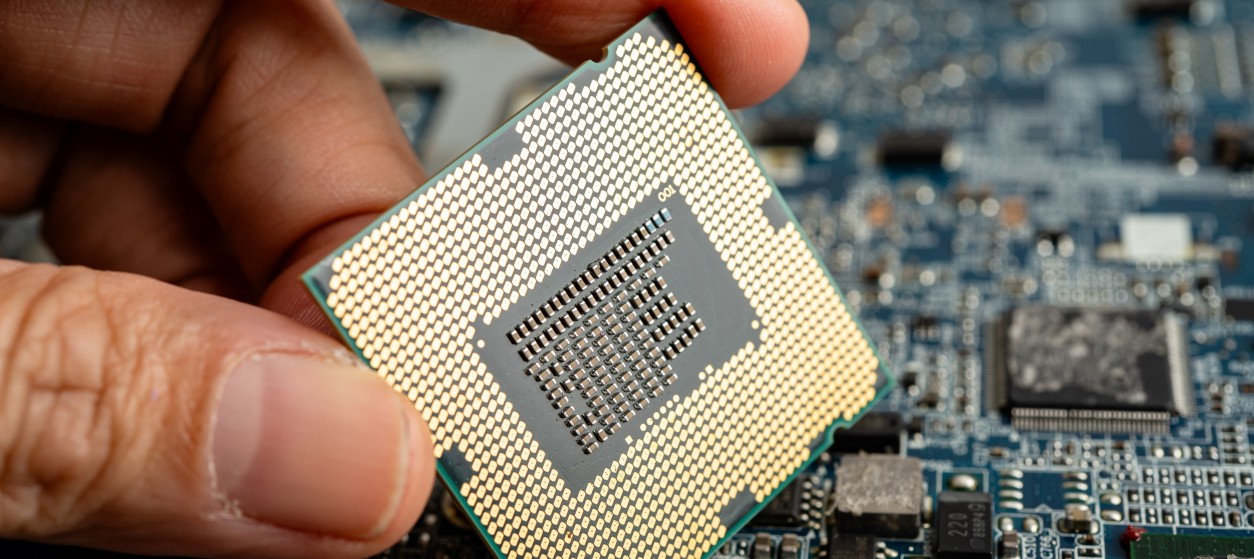
At the hardware level, modern edge nodes are increasingly equipped with AI accelerators, which are specialized chips such as NPUs (Neural Processing Units) or ASICs (Application Specific Integrated Circuits) designed to run neural network inference at low power and high speed. Platforms like NVIDIA Jetson, Qualcomm AI Hub, and microcontrollers with embedded ML support have brought serious AI for IoT capabilities to constrained devices that would have been impossible and unthinkable just a few years ago. You no longer need a server room at the edge to run intelligent workloads.
At the software level, model optimization techniques such as quantization, pruning, and knowledge distillation allow large, cloud-trained models to be compressed into smaller, faster versions which are suitable for edge deployment. Frameworks like TensorFlow Lite, ONNX Runtime, and OpenVINO provide the runtime infrastructure needed to deploy these optimized models. The result is an architecture where a model is trained in the cloud but performs inference locally, which means that it can operate in real time and independent of upstream connectivity.
Architecting for Low Latency: Here’s the Part Nobody Talks About
Building Edge AI systems goes beyond about model deployment to the design of a coherent data and intelligence architecture that spans devices, edge nodes, and the cloud. This architecture degrades gracefully when connectivity is imperfect. It is an architectural thinking that separates teams who get real results from those who end up with a complex deployment that still behaves like a cloud system.
A robust Edge AI architecture typically follows a tiered model. The device tier handles raw data capture and basic pre-processing. The edge tier is typically a local gateway or on-premise server that runs inference models, produces actionable outputs, and handles IoT analytics locally without waiting for the cloud. The cloud tier handles model training, versioning, long-term storage, and fleet management. This separation allows the edge layer to operate independently in ways that maintain real-time responsiveness even when cloud connectivity is temporarily unavailable.
Predictive analytics is a natural fit for this tiered architecture. Rather than streaming raw sensor data to the cloud and waiting for a forecast to come back, it is possible to deploy a pre-trained predictive model at the edge. The model monitors local signals, triggers alerts when anomaly thresholds are exceeded, and logs structured events rather than raw telemetry. This compresses the decision loop from seconds down to sub-millisecond inference cycles, while simultaneously reducing bandwidth costs and cloud processing overhead.
Getting Your Edge AI Program Off the Ground Without Overengineering It
Starting an Edge AI initiative does not require overhauling your entire IoT infrastructure overnight. The teams that succeed tend to do the opposite i.e., they begin narrow, prove value quickly, and expand deliberately. It is recommended to start with a high-value, latency-sensitive use case. Predictive maintenance, real-time quality inspection, and anomaly detection in critical infrastructure are strong candidates. These are use cases where the gap between cloud latency and edge computing performance translates directly into measurable business value such as reduced unplanned downtime, lower scrap rates, and improved operational safety. Select your edge hardware based on the inference workload, not the other way around. Not every use case requires a GPU-accelerated edge server. Many predictive analytics workloads run comfortably on lightweight industrial gateways.
It is also important to design your MLOps pipelines in ways that consider the edge from day one. Model training happens in the cloud, but model deployment, monitoring, and retraining cycles must accommodate the edge layer from the start. Tools like KubeEdge, AWS IoT Greengrass, and Azure IoT Edge provide the orchestration infrastructure to manage deployed models across large device fleets. They deal with the tasks of pushing updates, rolling back failed deployments, and collecting inference metrics. Overall, you must think of your Edge AI program as a living system rather than as a one-time deployment exercise.
Overall, Edge AI is a natural evolution of how intelligent systems need to operate in a connected, time-sensitive world. It combines edge computing with AI inference to allow organizations to close the gap between data and decision in ways that cloud-only architectures simply cannot achieve. When developing industrial IoT systems, connected infrastructures, and real-time analytics platforms, the principles remain the same: push intelligence to where data is born, design for resilience, and let the cloud do what it does best i.e., training, aggregation, and strategic oversight. It is a good idea to start with one use case with proven business value. The clarity that comes from a single successful Edge AI deployment will usually accelerate everything that needs to follow.