Few year ago, enterprise mobile strategy meant little more than giving employees a company phone with email access. In several cases, employees were also provided with a handful of standalone apps that handled discrete tasks. A typical stack of Mobile Apps included for example one app for messaging, another one for expense reports, and a third one for time tracking. Each operated in its own silo, and the burden of connecting information across them was clearly a responsibility of the user. This era seems to be fading out fast. In recent years, organizations are increasingly rethinking how workplace apps fit together with a view to shifting their focus from individual tool selection to building a connected workplace where Mobile Apps act as the central nervous system of day-to-day tasks and operations. Nowadays, it is important for enterprises and their Chief Information Officers (CIOs) to understand why such as shift is happening, what it looks like in practice, and how they can position their organization to benefit from it.
Siloed App Strategies may be Most Costy than You Think
Most organizations didn’t intent to build a fragmented mobile ecosystem. In most cases, this fragmentation happened gradually. One department adopted a Project Management tool, another rolled out a field service app, and IT introduced a separate portal for support tickets. Such patterns led employees to deal with a dozen workplace apps, each one requiring its own login, its own learning curve, and its own data format.
The hidden cost of this situation is more than inconvenience. It involves lost context as well. As a prominent example, when a sales representative checks inventory in one app but has to switch to another to update a customer record, valuable information can be lost. To realise the real price of disconnection, one must multiply that across hundreds of employees and thousands of interactions per day. In this context, research consistently shows that excessive app-switching drains productivity and increases error rates. In the scope of enterprise mobile environments, the problem is compounded due to smaller screens and on-the-go usage patterns. Workers in the field or on a factory floor can’t afford to switch between disconnected tools. Such employees need information that flows seamlessly from one context to the next, without any need for additional context transfer or data entry actions.
Architecting The Connected Workplace
A very common misconception is that building a connected workplace means finding one super-app that does everything. In reality, no single platform can serve every function across every department. Therefore, the real goal is to integrate the various apps towards ensuring that your mobile tools talk to each other and share data. This is where modern API-first platforms and integration layers come in. Tools like middleware connectors, unified identity providers, and event-driven architectures allow companies to stitch together best-of-breed workplace apps into an integrated and consistent experience. In this way, the user doesn’t need to know which backend system is serving the data. Users simply open their mobile device, and the information they need is there, in context, ready to act on. One can think of it as moving from a toolbox model to a workbench model. In the toolbox, every tool sits separately, which means that you have to pick up each one as needed. On the other hand, in a workbench model the tools are arranged around the task. One can reach for what she/he needs without breaking the workflow. This workbenchmentality translates into fewer taps, faster decisions, and less cognitive overhead for the end users.
The Mobile Environment of High-Performing Teams
When you study organizations that have successfully transitioned to a connected workplace model, a few patterns and best practices emerge. First, they treat mobile not as a secondary channel but as a primary interface for critical workflows. Approvals, escalations, real-time reporting are treated and managed as purpose-built experiences that are designed for speed and simplicity.
Second, high-performing teams invest in context propagation. This means that when a notification arrives on a user’s phone, users can open the exact screen, with the exact data, that they need to handle the notification and to take relvant action. Hence, there’s no hunting through menus or re-entering of search terms. The enterprise mobile experience becomes anticipatory rather than reactive.
Finanlly, successful organizations standardize their shared data layer. Whether it’s a customer record, an inventory count, or a compliance checklist, every app in the stack reads from and writes to a common source of truth. This eliminates the version-control nightmare that plagues disconnected systems. Most importantly, it gives to the company’s leadership real-time visibility into operations without waiting for someone to compile a report.
Stating the Transition from Standalone to Connected Mobile Environments
If your current mobile strategy still revolves around standalone apps, the transition doesn’t have to be a wholesale rip-and-replace. One best practice is to start by mapping your most frequent cross-app workflows. Where do employees routinely copy information from one tool to another? Where do approvals stall because someone didn’t see a notification in the right app? These pain points represent some of the highest-value integration targets.
Next, it’s a good idea to evaluate existing workplace apps for API availability and webhook support. The tools that can’t participate in an integrated ecosystem may need to be replaced over time. The good news is that many modern SaaS platforms already support the connectors you need. A phased approach is recommended: Integrating two or three critical workflows first, lets companies demonstrate value quickly without overwhelming their IT teams or and their end users.
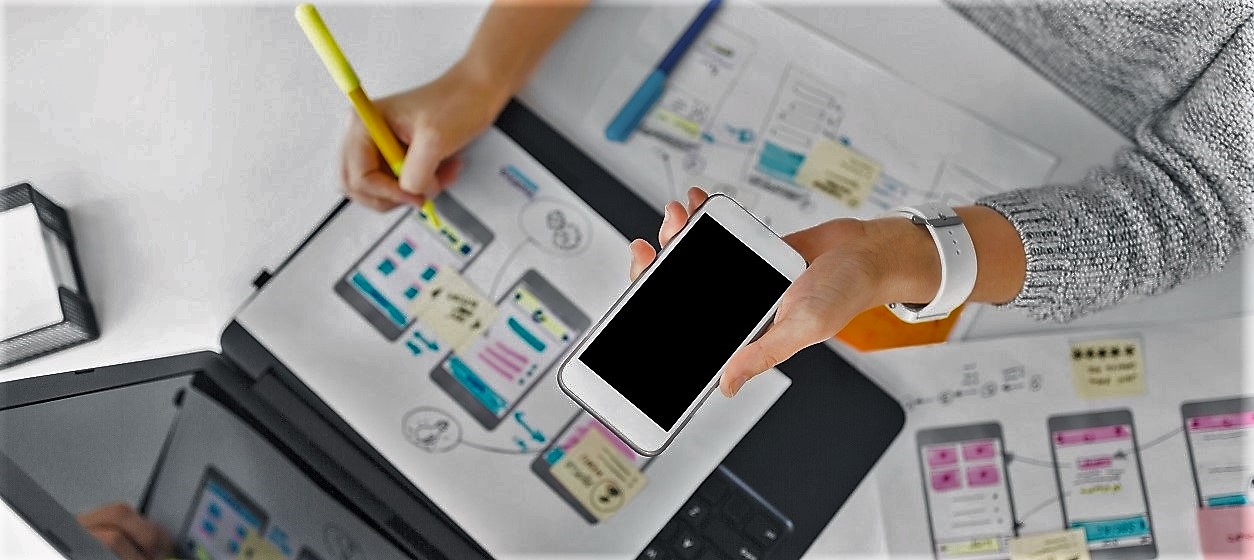
It’s also important not to underestimate the importance of mobile-first design in your connected workplace strategy. Integration is only the first part of the transition. This part must be complemented with a proper user experience. Every connected workflow should be tested and refined on mobile devices first. The conventional approach of adapting workflows from a desktop interface will compromise the effectivness of the mobile workplace. The goal is to make mobile the easiest and fastest way to get work done based on proper design at every layer of the workplace stack.
Overall, the shift from standalone apps to connected experiences must be treated as a fundamental change in how work gets done. Enterprise mobile strategies that prioritize integration, context, and user experience will outperform those that continue to treat mobile as a collection of isolated tools. However, enterprises need not overhaul everything overnight.They can dispose with a smooth transition path that start with the workflows that matter most and accordingly builds the connections that create the most value. It is also important to design every interaction based on a mobile-first approach i.e., with the mobile user in mind. The connected workplace is a destination within reach and the mobile channel is how most of employees will get there.