From Vision Pro to AR Glasses: Immersive Technologies Turn Everyday Life into Science Fiction
In recent years, immersive technologies like Apple Vision Pro and the advancing ecosystem of Augmented Reality (AR) glasses are rapidly transforming everyday interactions in directions that are more interactive and engaging. These AR technologies are gradually making what once seemed like science fiction part of our reality. The main reason behind this evolution is that this new wave of wearable AR devices and mixed reality experiences is fueled by a host of key technological enablers that were not mature or accessible just a few years ago. As these technologies evolve, immersive technologies will be increasingly used to unlock groundbreaking business applications across industries.
The Main Enablers of Extended Reality (XR) and Augmented Reality AR Applications
Modern XR and AR platforms benefit from the following core technological advancements:
· Powerful Wearable Devices: The latest generation of AR smart glasses (e.g., Apple Vision Pro, Meta Quest Pro, and Magic Leap) are lighter and more comfortable that ever. At the same time, they are packed with powerful processors, high-resolution displays, and sensors that enable sophisticated environmental mapping. These embedded systems endow modern AR/XR devices with capabilities that were hardly available few years before.
· 5G & Edge Computing: Nowadays, ultra-fast, low-latency connectivity via 5G networks and edge computing infrastructure can deliver seamless, real-time AR overlays and collaborative experiences from anywhere. As such, 5G networks unlock remote immersive experiences based on ultra-low latency that makes it very difficult for end-users to perceive distance. In coming years, the advent of 6G networks is expected to further improve these remote experiences and enable true virtual presence.
· Artificial Intelligence (AI) & Computer Vision: AI can nowadays power real-time object recognition, gesture tracking, spatial mapping, and proactive contextual assistance functionalities. The latter make AR more intuitive and adaptable, while enabling applications that blur the boundaries of real and virtual interactions.
· Cloud Integration: Modern cloud computing platforms enable vast XR content libraries, real-time device sync, and scalable AI services. As such they remove the hardware bottlenecks of earlier AR generations. Coupled with high performance streaming of XR objects, they enable more scalable and more sophisticated applications than in the past.
· Interoperable Standards: In recent years, XR applications benefit from interoperability standards such as OpenXRexperiences on wearables, phones, and tablets. This is very important for several use cases, such as providing remote industrial support to different customers all around the world without requiring them to adopt and deploy the very same device.
· Miniaturization & Haptic Feedback: In recent years, sensors, batteries, and processors have shrunk dramatically. This enables more ergonomic and discreet AR devices. Moreover, haptic interfaces now provide touch feedback, which makes digital experiences more immersive.
The above-listed technological enablers drive the next-generation AR tech, which blurs the boundaries between virtual and physical environments and makes true augmented reality in everyday life a reality.
Examples of Futuristic XR Applications and Their Business Benefits
Some of the most prominent examples of futuristic XR/AR applications with clear business relevance follow:
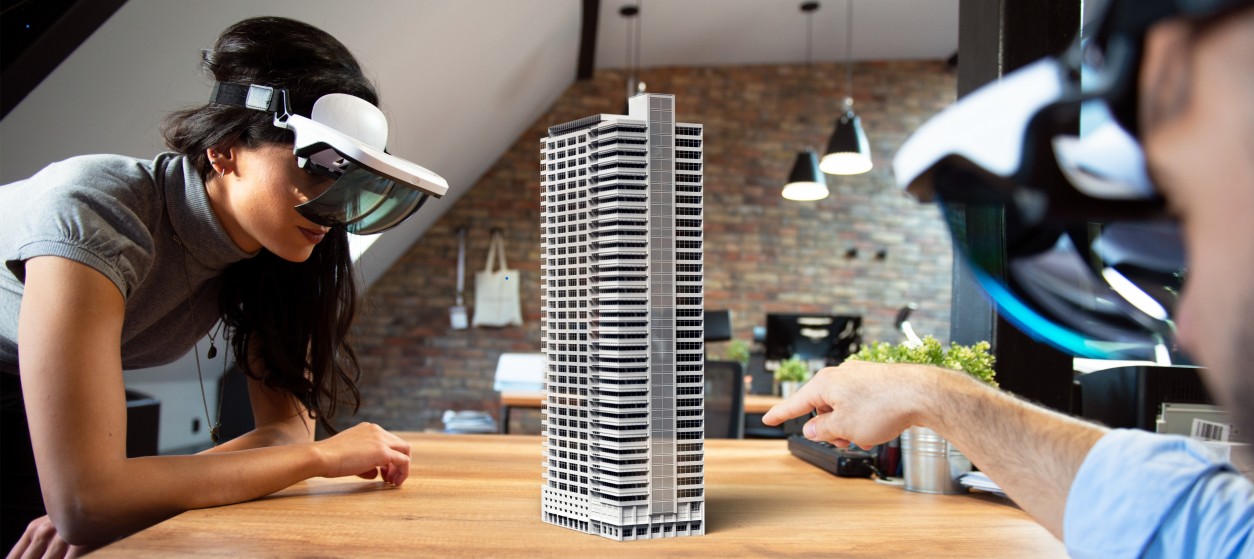
· Spatial Collaboration and Virtual Workspaces: This use case involves teams using AR glasses to see shared 3D data, digital whiteboards, and live annotations directly over physical environments. For instance, remote workers can join as holographic avatars in “virtual offices”. This has clear business benefits such as enhanced collaboration that accelerates Product Development, reduced travel costs, and increased inclusivity for remote teams. This use case is enabled by advances in real-time rendering, spatial audio, edge processing, and standardized XR protocols that make multi-user AR both seamless and hardware-agnostic.
· Immersive Retail and Connected Shopping: This use case involves shoppers that try on products (e.g.., glasses, shoes, makeup) virtually. Specifically, shoppers can view product info and interactive demos in the store aisle via wearable AR devices. At the same time, home shoppers preview furniture or appliances at real scale in their own rooms. The business benefits of this use case include higher conversion rates, personalized shopping, fewer returns, richer analytics, and greater brand engagement. This use case is currently enabled by modern
AR glasses’ spatial mapping, AI-driven recommendation systems, and advanced mobile hardware, which have recently reached the fidelity required for lifelike virtual try-ons and contextual in-store navigation.
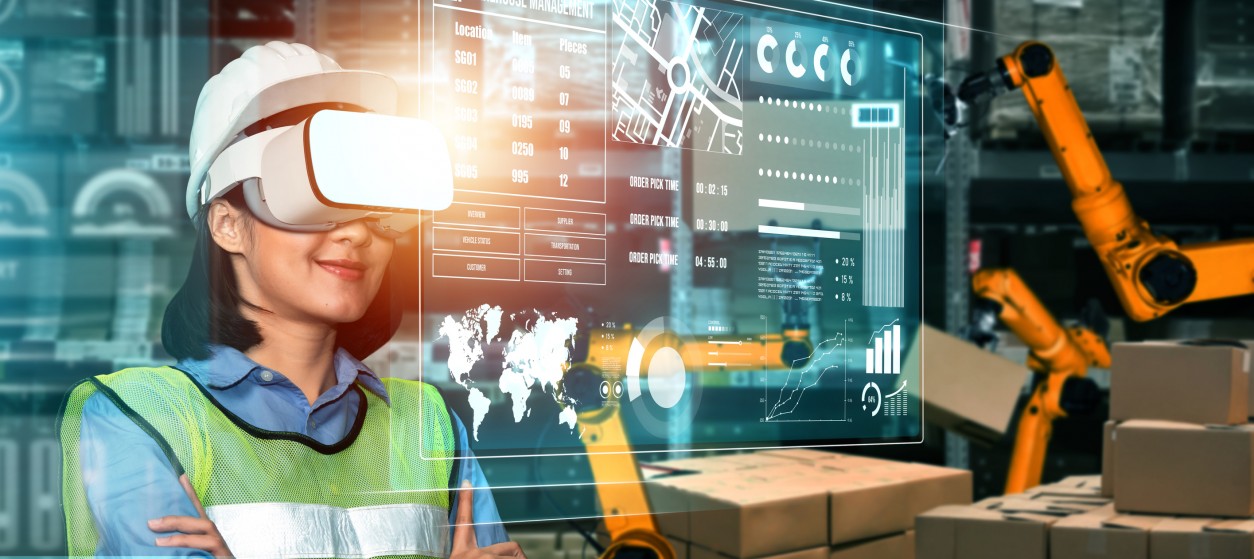
· Precision Field Service and Maintenance: This is a use case that involves technicians who wear AR glasses to overlay repair instructions, live schematics, and remote expert guidance over real equipment. The use of AR glasses helps them keep their hands free. AR-based maintenance results in fewer errors, faster repairs, reduced downtime, scalable expert support, and major cost savings. It is a use case that is fit for purpose in domains like for complex manufacturing, utilities, and telecom sectors. The use case is enabled by advances in computer vision, hands-free gesture control, cloud connectivity, and wearable battery life, which have converged to enable real-time expert AR guidance in real-world environments.
· Next-Generation Healthcare and Medical Training: There are novel use cases, where surgeons use AR overlays for real-time imaging or navigation during procedures. Likewise, medical students can train in hyper-realistic XR-based operating rooms or practice live telemedicine visits with virtual patients. These use cases lead to higher precision, fewer complications, scalable training, and democratized access to top-tier medical expertise. They are nowadays possible thanks to modern AR displays’ resolution, touch feedback, and AI-driven contextual insights that enable safe, real-time guidance and simulation. The latter functionalities were impossible based on older hardware.
· Personalized Education and Gamified Learning: Students in classrooms and remote settings can nowadays use AR glasses to interact with 3D models, conduct science experiments in mixed reality, and learn historical events based on exploring immersive overlays on real sites. This opens novel educational opportunities that are characterized by increased engagement, deeper understanding, adaptive pacing, and enriched remote education at scale. These opportunities are possible as a result of advances in the fusion of cloud XR content, precision hand tracking, and location-based AR. These functionalities are gradually becoming affordable for mainstream classroom deployment.
Overall, XR and AR applications can nowadays benefit from a critical convergence of a wide range of advanced technologies such as: (i) Consumer-friendly wearable AR devices that combine comfort, battery life, and performance; (ii) Ubiquitous high-speed wireless coverage (5G/6G); (iii) Cost-effective AI toolkits that run in real time on mobile and wearable chips; and (iv) User Experience (UX) breakthroughs, including gesture recognition and touch feedback. At the same time, XR developers and deployers can greatly benefit from increased ecosystem maturity, which is reflected on rich content libraries, cloud-based XR services, and open standards for interoperability. Despite these breakthroughs, XR/AR deployments are still far from being ubiquitous. Nevertheless, the deployment of AR in everyday life is no longer a futuristic wish, but rather an evolving possibility and competitive advantage for organizations willing to invest early in order to shape tomorrow’s mixed reality experiences and set themselves apart from their competitors.