The world of work is undergoing unprecedented transformation and is being reinvented before our eyes. The traditional office is dissolving into a fully digital, borderless ecosystem. This transformation is leading us into a virtual future where location no longer defines productivity or opportunity. As organizations embrace distributed and virtualized environments, the distinction between physical and digital workspaces is fading. This is paving the way for new paradigm of collaboration, creativity, and growth.
The Shift to Distributed Virtual Work
Remote work has gradually evolved from a workforce adaptation measure into a strategic advantage. Nowadays, most organizations have access to advanced remote infrastructures, which enable them to access worldwide talent pools and to maintain continuous operations regardless of their geographical location. This distributed model depends on the widespread adoption of digital workplaces, which provide unified platforms for employees to collaborate in real time. Such digital workplaces include intelligent systems that allow seamless communication, Project Management, and workflow optimization. In practice, employees log into virtual sessions from anywhere in the world leveraging infrastructures like enterprise VPNs and cloud-hosted desktops. Most importantly, they can use these sessions without any loss in data security or performance. In these ways, the evolution toward distributed virtual work goes beyond replacing physical offices to reimagining work itself.
The Virtualization of applications, storage, and user interfaces means that resources are no longer limited by hardware, but accessible on demand. Furthermore, cloud service orchestration and zero-trust security frameworks enable modern employees to operate in a consistent environment that mirrors the corporate network regardless of time and their location. Hence, the concept of “remote office” is introduced, which enables employees to work without being in their conventional physical office.
The Rise of the Remote Office
The concept of a “remote office” has matured from the home workspace of the early 2020s (i.e., the first months of the COVID19 era) to an ecosystem of interconnected virtual hubs. These hubs function as extensions of corporate headquarters in the digital world. As such, they enable employees to maintain presence and identity within their organizations. Video collaboration, AI meeting assistants, and immersive dashboards are nowadays used to recreate key office dynamics in virtual form.
In practice, this shift enables organizations to reduce real estate costs, minimize environmental impact, and achieve higher operational agility. Physical offices are being replaced by virtual collaboration zones that bring people together without travel time or carbon emissions. In an era where sustainability is a growing priority, remote offices loom as both a technological and ecological evolution.
Modern technologies also enable the seamless and effective collaboration between remote office and physical office workers. For example, the emergence of hybrid communication platforms ensures inclusivity between in-office and remote participants. AI-driven translation, transcription, and scheduling tools make virtual meetings more effective and allow global teams to interact naturally regardless of linguistic or cultural barriers.
Bring Your Own Device: Empowering Digital Workforces
One more transformative trend that fuels the transition to remote and/or hybrid work environments is BYOD (Bring Your Own Device). Employees worldwide use personal devices to access secure corporate infrastructures. This flexibility allows them to choose preferred tools and operating environments in ways that boost productivity and efficiency. For organizations, BYOD reduces hardware expenses and strengthens digital transformation. Moreover, it fosters user adaptability and continuous innovation.
However, the rise of BYOD also brings heightened cybersecurity responsibilities. Enterprises must balance freedom with governance by deploying Mobile Device Management (MDM) and endpoint protection solutions. These technologies ensure that any personal devices connecting to enterprise networks comply with policies and encryption standards. BYOD must drive mobility without compromising control in order to create a workforce that is both empowered and secure.
Virtual Teams and Global Collaboration
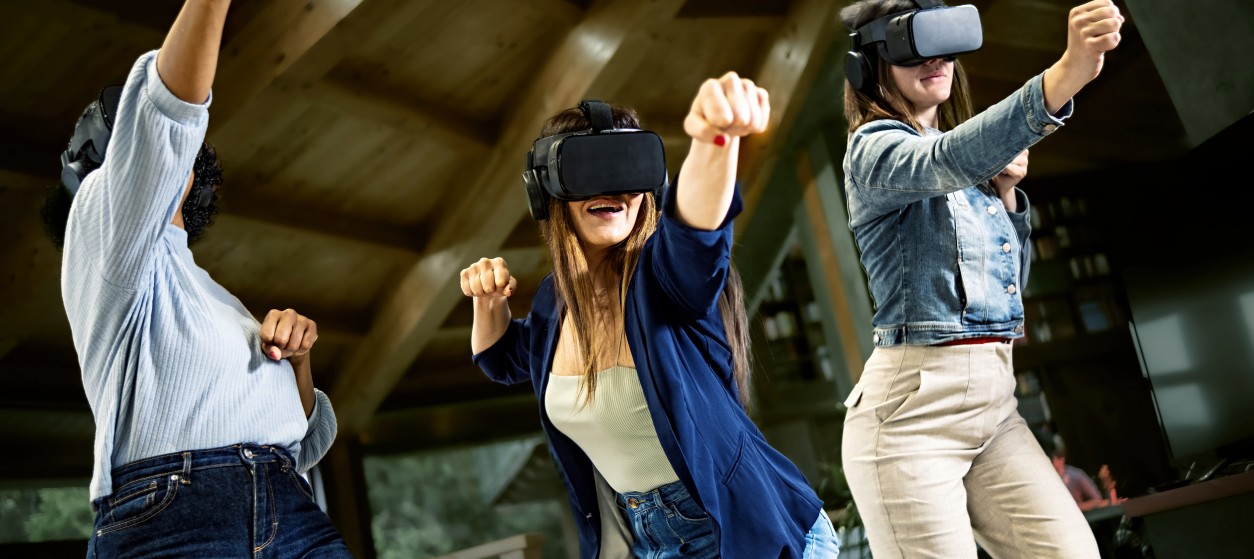
Distributed virtualized environments are enabled by digital technologies, yet human connection remains central. Virtual teams can be nowadays composed of professionals from every continent, which can collaborate effectively using cloud workspaces, shared dashboards, and AI-facilitated communication tools. For example, digital platforms such as Microsoft Teams, Slack, and Notion have evolved far beyond messaging and meeting functions to foster group work and collaboration. They incorporate real-time project visualization, knowledge-sharing repositories, and automated task allocation through AI integrations. At the same time, Virtual Reality (VR) meeting rooms have also emerged. The latter comprise avatars of team members that occupy the same 3D workspace towards mimicking natural conversations and gestures. This shift marks a new frontier for VR in business. Companies are increasingly using immersive environments for training, simulation, design, and strategy sessions. Here, productivity is no longer measured by physical attendance but also by interaction quality, data contribution, and creative impact.
Metaverse: The Future of Presence in an Expanding Virtual Economy
The next stage of workplace evolution is expected to unfold through the Metaverse. The latter is defined as an interconnected digital universe for industrial use cases beyond gaming and entertainment. For enterprises, it’s a new space for collaboration, commerce, and community building. Virtual offices, trade exhibitions, product demonstrations, and recruitment fairs can now be hosted entirely in 3D Metaverse platforms. Moreover, organizations are already experimenting with digital headquarters where employees interact as avatars, host meetings, and network in immersive spaces. This presence-driven model fosters inclusion and creativity by breaking down traditional communication barriers. Most importantly, it enhances organizational culture by blending work, identity, and experience in a single digital continuum.
Metaverse workspaces are destined to support advanced data visualization and spatial computing in order to empower analysts, designers, and strategists to engage with information in entirely new ways. Rather than viewing charts on a flat screen, professionals can navigate datasets in virtual 3D space towards improving comprehension and decision accuracy.
As work migrates into digital ecosystems a new metaverse powered economy is likely to emerge. Specifically, new market structures are emerging as part of what is referred to as the virtual economy. This economy is built upon digital products, services, and currencies that circulate within connected online environments. Freelancers and knowledge workers can capitalize on decentralized work exchanges where payment, reputation, and ownership are managed in decentralized ways such as blockchain-secured formats. In this landscape, value creation extends beyond traditional job roles. Virtual goods, immersive experiences, and tokenized intellectual property form the backbone of future economic models. For instance, digital architects can design virtual office buildings for the metaverse, while educators deliver interactive training sessions within 3D classrooms. The boundaries between work, learning, and commerce will be soon merging into one dynamic continuum.
Human Empowerment in the Virtual Age
Despite its technological core, the virtual future remains deeply human. Success in this new territory depends on empathy, adaptability, and the ability to navigate digital communities with authenticity. Organizations leading this revolution are prioritizing employee well-being, mental health, and work-life balance. Advanced analytics within digital workplaces can nowadays track engagement, workload distribution, and well-being indicators. Likewise, AI-driven insights can help managers design equitable workflows and support meaningful human connection, regardless of location. This focus on human-centric digitalization ensures that as work becomes more virtual, it also becomes more inclusive and fulfilling.
Overall, the evolution of work into fully virtualized ecosystems represents one of the most significant transitions in modern civilization. The integration of virtual reality in business, metaverse innovation, digital workplaces, and the virtual economy is expected to underscore a new definition of success. This definition won’t be measured by hours at a desk, but rather by merit, contribution, collaboration, and creativity. In this emerging reality, geographical boundaries dissolve, and talent shines from anywhere. The virtual future rewrites the present and creates new settings where people connect, businesses operate, and lives thrive.